
When examining the “anatomy of wine”, experts evaluate its structure by focusing on a list of key elements.
Wine Colour
When Homer narrated Odysseus’ homecoming journey across the Mediterranean, he often described the dark hues of the deep sea as “oinops,” meaning “wine-dark.” Homer may have had the blue-reddish dark colour of Greek wine in mind, but what we describe as wine colour nowadays is much more complex.
The most well-known colour categories are undoubtedly the “whites” and “reds,” with the former typically being made from white or green grapes and the latter from red or black grapes. Rosé wines, on the other hand, are made from black grapes but have limited contact with the grape skins, which results in a pink rather than red colour.
In the anatomy of wine, colour is the visual indicator of its age, grape variety, and style. Derived primarily from the contact of the juice with grape skins during fermentation, wine colour is also defined by its depth and tone.
Wine Depth
Wine depth describes how transparent or opaque the wine appears when visually examined against a white background. The thicker the grape skins during fermentation, the deeper the colour of the wine. Think of Syrah and Cabernet Sauvignon; if you were offered a glass, you would not be able to see the stem of the wineglass when examining it from the top. You may anticipate a grippy sensation in your mouth right before you take a sip, as a deep colour suggests more tannins in the body. The winemaker left the skins in contact with the juice for longer periods, resulting in this unique texture.
On the other hand, pale wines such as Pinot Noir and Grenache are a result of thin grape skins. They are usually less overpowering, but can create a crisp, mouth-watering sensation due to their high acidity. Of course, there are always exceptions. Nebbiolo may be described as pale, but it hits your palate with a grippy aftertaste. Lastly, red wines may appear lighter after being exposed to oxygen for many years, which can be a good and desirable sign of maturity when it happens slowly and under the right conditions.
Wine Tone & Hues
When it comes to evaluating the anatomy of wine colour, the tone and hues are the most obvious indicators of its origins, age, and style. Wines are generally categorised into reds and whites, with their hues ranging from purple to tawny and greenish-yellow to amber, respectively. In the middle ground, rosé can vary from pale pink and salmon to magenta or cherry. These specific shades can be indicators of the wine’s age and acidity. For example, bright red and white hues indicate a lower pH and therefore higher acidity.
When it comes to the tone of the wine, this term describes its intensity and “greying out” effect. Young wines tend to have a vibrant and saturated look, whereas aged wines begin to look dusty and muted. A greyed-out, muted tone suggests complexity and sophistication through ageing and an overall longer contact with grape skins. Sometimes, the term “tone” is used to describe the wine’s taste rather than its visual appearance, with high-toned wines being highly acidic and sharp.
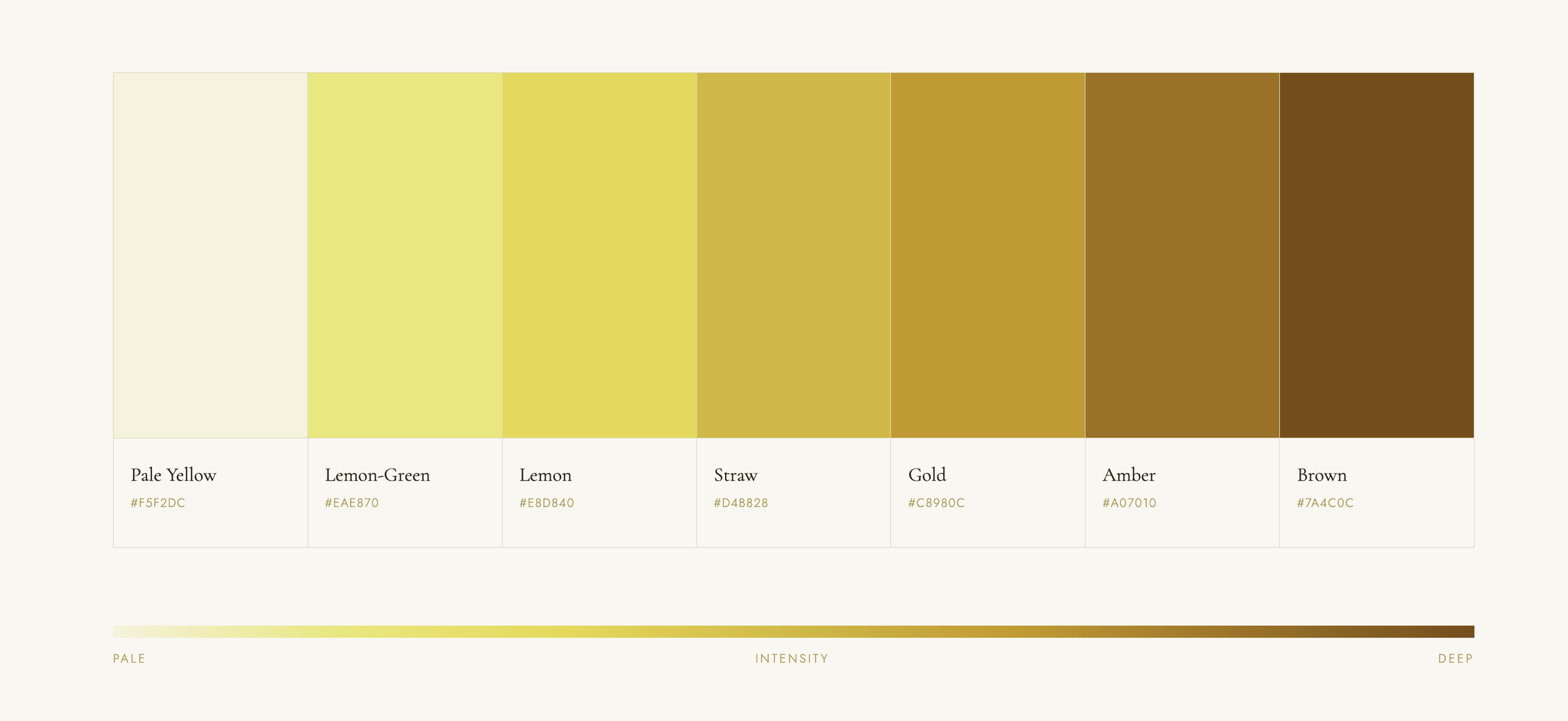
Shades of white wine
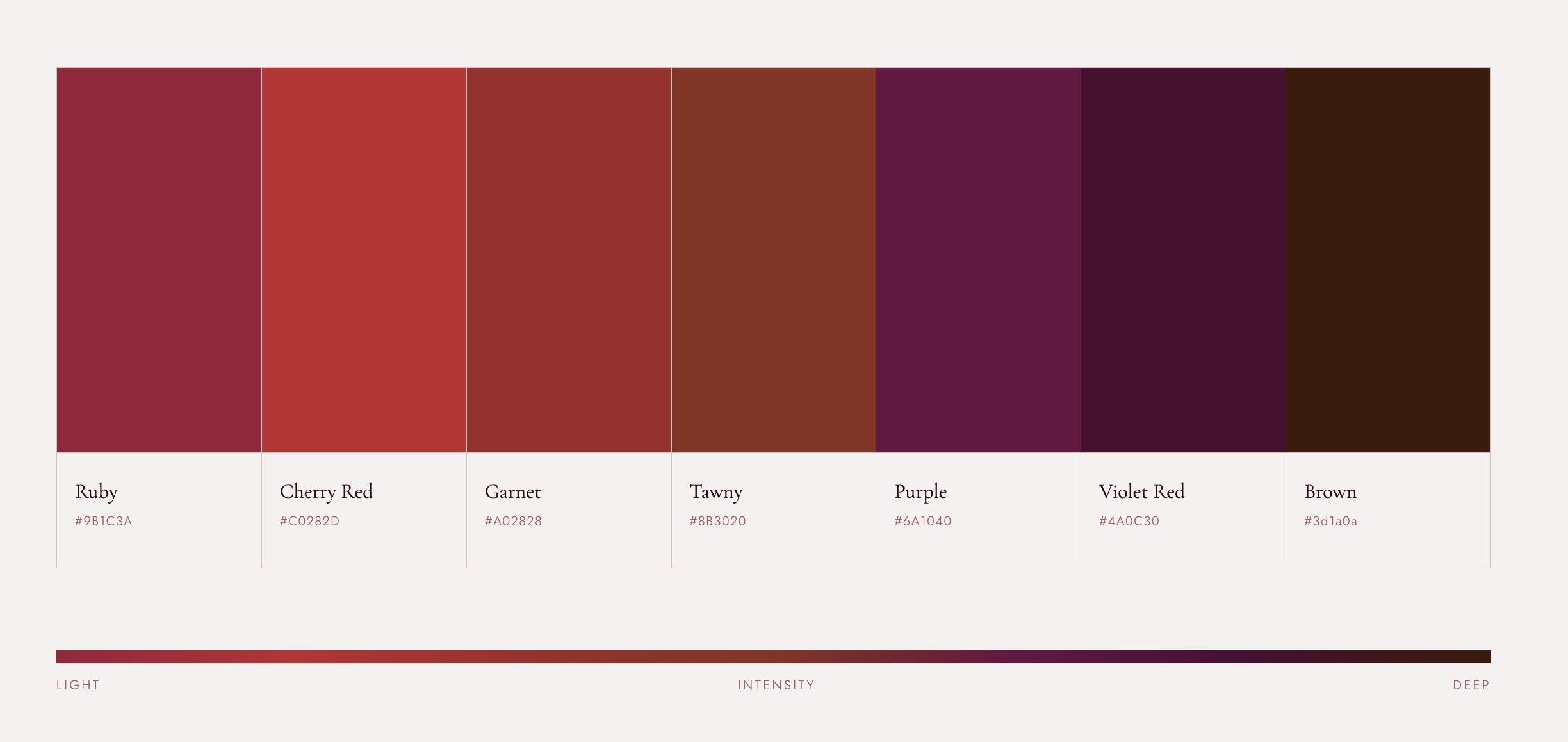
Shades of red wine
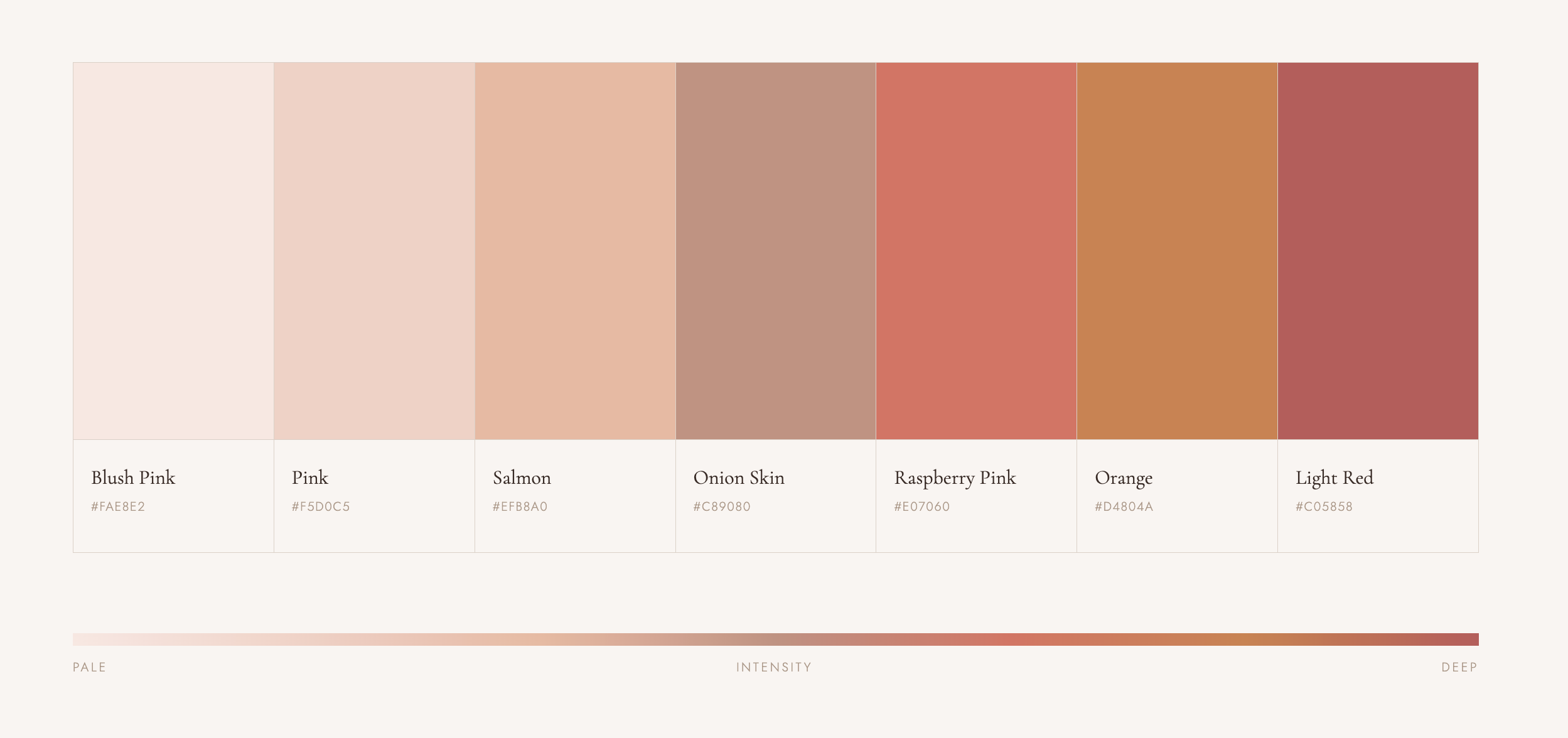
Shades of rosé
Wine Taste
The taste of wine is a multi-sensory experience that involves more than our gustatory sensations. Sight and smell are both extremely important senses when it comes to wine tasting, as they help us experience all the chemical compounds from the fermented grapes. For example, a glass of opaque wine may evoke a grippy sensation in our palate before the first drop hits our lips, while we may start tasting lilacs when, in fact, it was the floral aromas that filled the air that contributed to this flavour. Wine can taste sweet, sour, or bitter. Depending on its variety or region, it may have a fruity, herbal, or earthy flavour, which is mostly influenced by the sense of smell. Although there are several different ways of describing its taste, there are five key structural elements that determine its balance, mouthfeel, and personality: sweetness, tartness, astrigency, alcohol, and body.
Sweetness
The first tingling sensation we feel as soon as the wine reaches the tip of our tongue is the level of its sweetness. This structural element is determined by the residual sugar left after fermentation, with wines ranging from dry to sweet. Dessert wines like Moscato are described as sweet, whereas dry wines such as Sauvignon Blanc have a savoury and crisp taste. Although sweetness is connected to residual sugar, acidity, tannins, and aromas can sometimes alter the way we perceive this element. For example, fruity notes can trick us into thinking that a dry wine is sweet, while high acidity can reduce the perceived sweetness of an otherwise sweet wine. Terms such as “Brut,” “Sec,” or “Dessert” on the label can help us identify its true sweetness.
Tartness
The backbone of the wine is its acidity, also known as “tartness.” Wines can be high or low in acidity, a factor that is highly influenced by the climate of the grape’s region. Tarter wines are usually produced in cooler climates, such as Germany or Northern France. They feel crisp, zesty, or sharp, as they tingle our cheeks and take our salivary glands into overdrive. On the other hand, low-acid wines from warmer climates are described as smooth, soft, and rich. Sometimes, certain types of low-acid wines, such as Chardonnay, are the result of a process known as malolactic fermentation, a winemaking trick that transforms malic acid into a creamier lactic acid.
Astrigency
Tannins are natural compounds found in grape skins, seeds, and stems, but also in oak barrels used for ageing. These compounds influence the third structural element that influences how a wine tastes: its astringency. Tannins bind to proteins in our saliva, creating a drying or grippy sensation in our mouth. High astrigency wines such as Cabernet Sauvignon cleanse our palate thanks to this drying effect, which is desirable when eating meats and fatty food. Low astrigency wines such as Pinot Noir feel more gentle and smooth, as they have fewer tannins. Sometimes, high astrigency can sfeel bitter and unpleasant when low-quality, unripe grapes were used in the process. At the same time, proper ageing processes can soften this structural element, resulting in velvety astrigent wines.
Warmth
Certain wines create a sense of heat or a burning sensation in the back of the throat. They usually taste fuller and sweeter, and their perceived warmth is not related to the room’s temperature. Instead, the fourth structural element of a wine’s anatomy of taste is based on its alcohol content. The higher the alcohol (14.5% ABV or higher), the warmer the wine. When you swirl wine and see droplets crawling down the glass, those are the wine’s "legs," an indicator of its alcohol content. Although the wine’s warmth is a matter of preference, wine should never taste like booze, deprived of any distinct aromas and flavours. If the alcohol is too high and unmasked, the wine is described as “hot.”
Body
What is described as the wine’s body is its perceived weight and thickness. Think of how water and cream feel different in your mouth; the former feels light and lean, while the latter is described as heavy and rich. Similarly, depending on the synergy of alcohol, sugar, and tannins, wines can be light-bodied, such as Sauvignon Blanc, medium-bodied, such as Merlot, and full-bodied, such as Oaked Chardonnay. The lighter the wine, the easier it is to drink, whereas middle ground labels are balanced and food-friendly. Heavier wines feel rich and intense and, although they can be paired with food, they are ideal for meals that have rich textures and tastes; low-fat, delicate appetisers can be overpowered by such rich wines.
Exploring the Anatomy of Wine
From Chardonnay to Pinot Noir, lamie offers a variety of carefully selected wines accompanied by a detailed guide that helps you dive into the anatomy of wine by trying new varieties and labels.